Why rabbits need a rabbit-savvy vet
Rabbits are quiet about pain. A smaller pile of hay, fewer droppings, or a bunny pressed into a corner can be the first sign that something hurts. Their teeth never stop growing, and the gut is built to keep moving on hay. When eating slows, the gut slows with it.
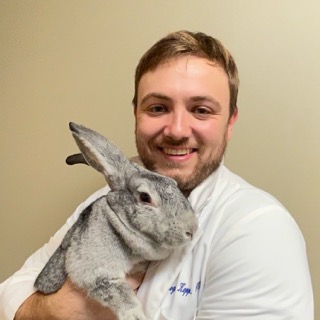
A veterinarian who sees rabbits every week knows what a comfortable rabbit looks like at rest, and which small change should move a rabbit to the front of the day. Dr. Kopp is that veterinarian for Nashville and Antioch. Rabbit visits with him are a regular part of the week at Priest Lake Veterinary Hospital, in a hospital set up for them.
Gold-level rabbit-friendly care, which this hospital meets, means a separate waiting area, housing away from dogs and cats, and staff trained to handle rabbits. Stress is a medical problem in this species. It slows the gut and makes pain harder to sort out.
Care rabbits come in for
Wellness exams
A yearly visit is a weight check, a look at the teeth and the bottom, and a conversation about hay, flooring, and the small habits you notice at home. RHDV2 vaccination is available for rabbits that should have it. An older rabbit who has gotten picky or stiff is worth the same kind of visit. There is a longer note on annual exams for exotic pets.
Spay and neuter
Rabbit spays and neuters are planned as rabbit procedures, with warming, monitoring, and a plan for pain and eating afterward. Unspayed females carry a real risk of uterine disease as they age. The spay and neuter guide walks through why families book this in Nashville.
Dental care and skull CT
Incisors are the easy part. Cheek teeth and roots hide, and an awake look often misses the problem behind drooling, a wet chin, or a rabbit who picks at pellets and leaves the hay. Dental treatment can include shaping and extractions. When the skull needs more detail, CT is arranged with Nashville Veterinary Specialists. Read about dental disease in pet rabbits and what a CT visit involves.
GI stasis and emergencies
A rabbit who stops eating is seen the same day while the clinic is open. Many of these cases are gastrointestinal stasis and can be treated and sent home. A few are blockages, a twisted liver lobe, or an inflamed appendix, and those rabbits need surgery. The family guide to GI stasis warning signs is the place to start if the hay pile is untouched tonight.
Urinary sludge and stones
Thick, chalky urine, straining, or urine stuck to the fur is a reason to call. Sludge and stones are common, and they hurt. There is a practical note on sludgy urine.
Sore hocks
Bald, red, or sore heels usually have a story behind them: flooring, weight, or sore joints. Treating the feet and changing the setup go together. See sore hocks, flooring, and weight.
Pain
Rabbits grind their teeth, stop grooming, or sit still. They rarely cry. Pain is part of the plan on dental disease, urinary disease, surgery, and older rabbits with arthritis. Recognizing pain and chronic pain in older rabbits cover what to watch for at home.
Anesthesia and surgery
Surgery includes spay and neuter, dental extractions, abscesses, and abdominal procedures such as appendectomy, obstruction, and liver lobe torsion, along with some nasal and ear surgeries. Anesthesia is built for a rabbit: monitoring, warmth, pain control, and food again as soon as it is safe. If a procedure is coming up, preparing for surgery and anesthesia is written for families.
Dr. Kopp's background
Dr. Logan Kopp grew up in Nashville. He earned his veterinary degree at the University of Tennessee. He is board-certified by the American Board of Veterinary Practitioners in Exotic Companion Mammal Practice. Those board-certification credentials are DABVP (ECM), and he is the only veterinarian currently practicing in Tennessee with that title.
He is also a Fellow in Companion Animal Pain Management (FABVP). Pain assessment is part of how he works up a rabbit, because comfort and appetite are tied together in this species.
He is the only Gold-level rabbit-friendly veterinarian certified by the Rabbit Welfare Association and Fund in North America. He is listed with the House Rabbit Society, and he consults for the Veterinary Information Network on exotic companion mammal cases. Clinics across Middle Tennessee refer rabbits to him. After that visit, routine care can go back to the veterinarian who already knows the rabbit.
What a visit is like
Bring the rabbit in a secure carrier. A solid side, or a towel over a wire door, keeps the trip quieter. A little of the hay they already eat is useful, both for comfort and so we can see what dinner looks like at home.
At the hospital, rabbits wait away from dogs and cats. Handling stays low-stress: gentle, with a firm hold only when a procedure needs it. Hides, familiar food, and a quiet recovery spot matter as much as the medicine. A rabbit who has stopped eating is not left in the lobby until a later slot.
If your veterinarian is sending the rabbit, ask them to send the history, medications, and any lab work or images ahead. See the referral page, including referring GI stasis cases and referring dental cases.
When to call
Call the clinic now if your rabbit:
- Has eaten little or nothing for several hours, or the droppings have shrunk or stopped
- Is hunched, grinding teeth, or hiding when they usually greet you
- Is drooling, has a wet chin, or is dropping food
- Is straining to urinate, or has thick urine caked on the fur
- Is cold, weak, or lying on their side
The hospital is open Monday through Friday, 7:30 AM to 7:00 PM. After hours, exotic companion mammal consults go through Veterinary Emergency Group in Franklin, Murfreesboro, and West Nashville. Dr. Kopp consults with those teams and can provide surgical care when a rabbit needs it. Leave human pain medicine in the cabinet.